Date of issue: 01-06-2024 · Version: 1.0 · Type number: 70027
In accordance with European Chemicals Regulation (EC) No 1907/2006 (REACH), as amended by Regulation (EU) 2020/878, a Safety Data Sheet (SDS) is required for all lead-acid batteries. This Safety Data Sheet (SDS) complies with EEC Directive 91/155/EEC. The data contained in this Safety Data Sheet have been compiled with great care from existing data. Targetpower accepts no liability whatsoever for damage, of any nature or extent, that may arise from the use of the data contained in this Material Safety Data Sheet.
1. Product information
| Chemical trade name |
SLI flooded lead acid battery (Starting, Lighting and Ignition battery). Lead-acid battery / SMF / STMF lead-acid battery / wet lead-acid accumulators. |
| Chemical family classification |
Accumulators, wet, acid-filled electrolyte – voltage: 2 Volt, 6 Volt, 8 Volt & 12 Volt – electrochemical system lead / sulfuric acid. (This product does not constitute a substance or exemption under the Chemicals Act.) |
| Application of product |
This SLI battery can be used as a dual purpose battery and is designed to supply electric power for starting, lighting and / or ignition and may also be used for auxiliary or backup purposes in vehicles, vessels and other means of transport or machinery for both professional and private use. |
| Importer company details |
Targetpower, Florijnstraat 16, 2988 CL Ridderkerk, Netherlands, website: www.targetpower.eu |
| Poisoning emergency number NVIC (National Poisons Information Centre) |
Emergency number Netherlands: +31 30 2748888 (exclusively for professional care providers). Website for doctors and professional healthcare providers: www.vergiftigingen.info |
2. Composition & details of components / hazards identification
A) Hazard classification
- Substances and mixtures which in contact with water emit flammable gases: category 2
- Pyrophoric solids: category 1
- Corrosive to metals: category 1
- Acute toxicity (oral, dermal, inhalation): category 1
- Skin corrosion: category 1
- Serious eye damage: category 1
- Carcinogenicity: category 2
- Reproductive toxicity: category 1A
- Specific target organ toxicity – single exposure: category 1
- Specific target organ toxicity – repeated exposure: category 1
- Hazardous to the aquatic environment – chronic: category 3
B) Allocation label elements
Symbol:
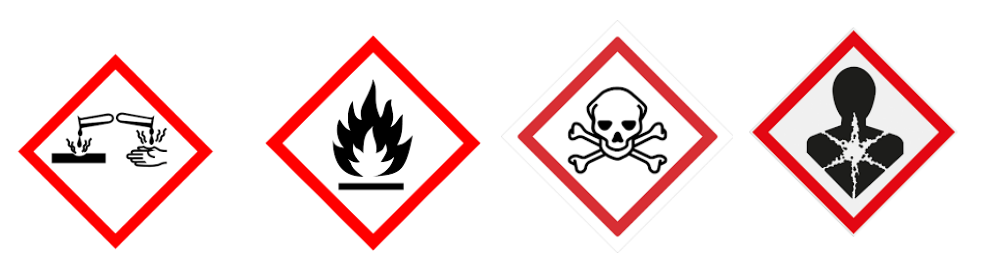

Signal word: Danger
Hazard statements (H-rates):
- H250 Catches fire spontaneously if exposed to air
- H261 In contact with water releases flammable gas
- H290 May be corrosive to metals
- H314 Causes severe skin burns and eye damage
- H318 Causes serious eye damage
- H330 Harmful if inhaled
- H350 May cause cancer (inhalation)
- H360 May damage fertility or the unborn child
- H370 Causes damage to organs
- H372 Causes damage to organs through prolonged or repeated exposure
- H412 Harmful to aquatic life with long lasting effects
Precautionary statements – prevention:
- P201 Obtain special instructions before use.
- P202 Do not handle until all safety precautions have been read and understood.
- P210 Keep away from heat/sparks/open flames/hot surfaces. No smoking.
- P222 Do not allow contact with air.
- P223 Do not allow contact with water.
- P231 + P232 Handle under inert gas. Protect from moisture.
- P234 Keep only in original container.
- P260 Do not breathe dust/fume/gas/mist/vapours/spray.
- P264 Wash thoroughly after handling.
- P270 Do not eat, drink or smoke when using this product.
- P271 Use only outdoors or in a well-ventilated area.
- P273 Avoid release to the environment.
- P280 Wear protective gloves/protective clothing/eye protection/face protection.
- P281 Use personal protective equipment as required.
- P284 [In case of inadequate ventilation] wear respiratory protection.
Precautionary statements – response:
- P301 + P330 + P331 IF SWALLOWED: rinse mouth. Do NOT induce vomiting.
- P303 + P361 + P353 IF ON SKIN (or hair): take off immediately all contaminated clothing. Rinse skin with water/shower.
- P304 + P340 IF INHALED: remove person to fresh air and keep comfortable for breathing.
- P305 + P351 + P338 IF IN EYES: rinse cautiously with water for several minutes. Remove contact lenses, if present and easy to do.
- P307 + P311 Immediately call a POISON CENTER/doctor.
- P308 + P313 IF exposed or concerned: get medical advice/attention.
- P310 Immediately call a POISON CENTER/doctor.
- P314 Get medical advice/attention if you feel unwell.
- P320 Specific treatment is urgent (see this label).
- P321 Specific treatment (see this label).
- P335 + P334 Brush off loose particles from skin. Immerse in cool water/wrap in wet bandages.
- P363 Wash contaminated clothing before reuse.
- P370 + P378 In case of fire: use an extinguisher.
- P390 Absorb spillage to prevent material damage.
Precautionary statements – storage and disposal:
- P402 + P404 Store in a dry place. Store in a closed container.
- P403 + P233 Store in a well-ventilated place. Keep container tightly closed.
- P405 Store locked up.
- P406 Store in corrosive resistant container with a resistant inner liner.
- P422 Store contents under inert conditions.
- P501 Dispose of contents/container in accordance with applicable regulations.
C) Other hazards which do not result in classification (NFPA)
| Component |
Health |
Flammability |
Reactivity |
| Lead |
Not available |
Not available |
Not available |
| Antimony |
Not available |
Not available |
Not available |
| Calcium |
3 |
1 |
2 |
| Tin |
Not available |
Not available |
Not available |
| Sulfuric acid |
3 |
0 |
2 |
| Polypropylene |
1 |
1 |
0 |
Composition / information on ingredients
| Chemical name / synonym |
CAS No. or ID |
Content (%) |
| Lead |
7439-92-1 |
54 – 56 |
| Antimony |
7440-36-0 |
0.2 – 0.7 |
| Calcium |
7440-70-2 |
0.03 – 0.07 |
| Tin |
7440-31-5 |
0.3 – 0.7 |
| Sulfuric acid |
7664-93-9 |
34 – 38 |
| Polypropylene |
9003-07-0 |
6 – 10 |
3. Possible dangers
When a wet lead-acid battery is handled and used correctly, there are no dangers to humans or the environment. Under normal operating conditions, a wet lead-acid battery is not considered to pose a serious risk.
Main hazards and characteristics
Lead-acid batteries contain an electrolyte that contains diluted sulfuric acid (37%). Sulfuric acid can cause severe chemical burns (if the casing breaks or is damaged, sulfuric acid may be released).
During the charging process, hydrogen gas may be produced, which under certain circumstances can lead to an explosive mixture. Lead compounds – the substance decomposes under strong heating into lead vapor (hydrogen gas) and oxygen. The substance reacts violently with reducing agents and forms chlorine gas with hydrochloric acid. (Often, during prolonged (over)charging, explosive detonating gas (O2+H2) is formed.)
Lead-acid batteries can contain a significant amount of energy, which can cause a source of high electrical current and/or a severe electric shock in the event of a short circuit. There is also a risk of fire or explosion in the event of a short circuit.
Sulfuric acid – reacts violently with strong bases, reducing agents, and water with strong heat generation.
4. First aid measures
This information is only relevant if the battery is defective (broken or torn) and this subsequently leads to direct contact with the ingredients of the product.
Electrolyte (diluted sulfuric acid): sulfuric acid is corrosive and damages the skin.
- In case of inhalation of sulfuric acid (acidic mists): stay calm and quiet in fresh air. Provide oxygen or artificial respiration if necessary. Always seek advice from a doctor.
- Skin contact with sulfuric acid: remove contaminated clothing and rinse the skin thoroughly with lukewarm water. Consult a doctor immediately in case of burns.
- Eye contact: rinse thoroughly with plenty of water for at least 20 minutes. If possible, remove contact lenses and continue rinsing. Consult a doctor if eye irritation persists.
- Ingestion: this is not an expected route of exposure. Rinse the mouth immediately and drink plenty of water / milk as a precaution. Do not attempt to neutralize with leaching agents. Do NOT induce or facilitate vomiting and consult a doctor immediately! Inform the doctor about the substance/product and the measures already taken. (Ingestion of mists from a leaking battery can cause irritation of the respiratory tract, chemical burns to the mouth, and irritation of the gastrointestinal tract; there is a risk of gastric perforation.)
5. Fire fighting measures
| Flashpoint |
N/A |
| Explosion limits |
N/A |
| Suitable extinguishing agents |
Class ABC extinguisher, carbon dioxide (CO2), foam, halon, water spray |
Both sulfuric acid and lead-containing compounds are not flammable themselves but can cause side reactions (formation of H2).
- Explosion hazard: risk of explosion in case of fire.
- Hazardous discharge products in case of fire: lead oxide.
- Exceptional fire and explosion hazard: during battery charging, oxygen gas (O2) and hydrogen gas (H2) are formed. Under overcharging conditions (high charging voltage), this gas is released into the environment as explosive gas. To reduce the risk of fire or explosion, follow the manufacturer's instructions regarding charging exactly and keep sparks and ignition sources away from a battery under charge. Prevent metal objects from causing a short circuit between the positive and negative terminals of the battery. Interrupt charging immediately if the battery becomes hot or if acid leaks out. Additionally, stop charging immediately if it emits an unusual odor, if the battery changes shape, or if anything else abnormal occurs during charging. ALWAYS ensure proper ventilation!
- Specific methods in case of fire or other hazard: if the batteries are under charge, switch off the rectifiers immediately. Use compressed air equipment. Fires involving 3 or more batteries connected in series (high voltage) pose an additional hazard. Permitted extinguishing agents in this case are CO2 and powder. Do not use water due to the risk of electrocution or explosions (hydrogen). Always wear acid-resistant clothing and protective equipment.
6. Accidental release measures
This information is only relevant if the battery is defective and the ingredients are released. If a battery bursts, avoid contact with skin, eyes, and clothing. Do not touch the spilled material with bare hands and proceed as follows. Use personal protective equipment.
- Personal precautions: always use (acid) protective clothing and wear safety glasses and gloves resistant to electrolyte when working with or on a battery.
- Environmental precautions: do not allow the electrolyte – contaminated with lead compounds – to enter the sewage system.
- Cleaning methods: first, remove all flammable materials and potential ignition sources. Try to prevent spreading and neutralize released sulfuric acid with soda (sodium carbonate), then rinse thoroughly with water. Collect the residue in a completely leak-proof plastic collection container or a battery bin specifically designed for battery disposal. If a battery leaks, place it immediately in a completely leak-proof plastic collection container.
- In the event of a spill, use a binding agent such as sand or cat litter to absorb the spilled acid.
- Use lime/sodium bicarbonate for neutralization.
- Dispose of the sand/cat litter exclusively in compliance with official regulations.
- Absolutely do not allow the penetration of acid into the sewage system, the soil, or bodies of water.
Prevent battery problems by: allowing only expert and qualified personnel to charge, connect, and/or replace the battery. In any case, always ensure you are well informed and follow all stated instructions (including the instructions supplied with the vehicle/machine and the accompanying SDS). Prevent short circuits, work safely, and above all, accurately! Always wear (acid-resistant) protective clothing and wear safety glasses and gloves when working with or on a battery.
Furthermore, always ensure proper, correct, and timely ventilated charging, and regularly check the charging voltage and the battery for voltage and sufficient acid content.
Always ensure and pay attention to the following:
- Never immerse the battery in water or allow it to become wet.
- Never store the battery near fire and/or heat sources.
- Never swap the positive (+) battery terminal with the negative (−) terminal.
- Never connect the battery directly to a wall socket.
- Never throw the battery into fire or expose it to a direct heat source.
- Never short-circuit the battery by connecting cables and/or other metals to the positive (+) and negative (−) terminals/battery poles.
- Never puncture the battery housing with a nail or any other sharp object; never attempt to break the battery open or step on it.
- Never hit or throw the battery; furthermore, never expose it to hard shocks and/or impacts. Never place and/or mount the battery upside down or on its side.
- Never weld directly onto or to the battery terminals. Also, do not weld in the vicinity of a battery.
- Never attempt to disassemble the battery or make any modifications to it.
- Never place the battery in a microwave oven or in a pressure vessel.
- Never allow the battery to come into contact with corrosive substances.
- Never use the battery together with other batteries. Certainly not with other types of batteries such as dry-cell batteries, but also not with batteries that have a different capacity, a different production date, or are of a different type or brand.
- Never use the battery if it emits an unusual odor, feels warm, changes color or shape, or if anything else abnormal occurs. If the above occurs during use or charging of the battery, immediately remove it from the device or disconnect it from the charger and stop using the battery. Then always consult qualified personnel.
Ambient temperatures can negatively affect battery performance. Always consult expert and qualified personnel in case of doubt regarding excessively high or low temperatures. Furthermore, if the battery is sealed at the factory, never attempt to open it!
7. Handling and storage
A. Precautions for safe handling: use the batteries in line with the use instructions provided. Protect from physical damage.
B. Conditions for safe storage (including any incompatibilities): avoid contact with eyes. Store in a cool, dry, ventilated area away from sources of heat, moisture, incompatibilities, and direct sunlight. Have emergency equipment (for fires, spills, leaks, etc.) readily available.
Technical measures
- Batteries must be stored in a clean, dry, and well-ventilated area at room temperature, where any contact with corrosive products is excluded and they are not exposed to heat, friction, pressure, and/or fire.
- Running water and an eyewash station must ALWAYS be available for emergencies.
Work instructions
- During storage, the battery must be checked regularly for voltage and charged if necessary (whenever the terminal voltage drops below 12.4 V).
- Do not throw or tilt batteries (always store upright & avoid dropping and bumping).
- Check that the battery caps are properly tightened so that electrolyte cannot come into contact with the ground, skin, or eyes. Always store a loose battery in a closed battery box and shield the terminals against short circuits.
- Never stack batteries on a pallet higher than the number of layers indicated by the manufacturer.
- Place a hardboard sheet (possibly with Styrofoam) between each layer of batteries to prevent contact between positive and negative terminals, and be careful with metal objects to avoid short circuits. Prevent potential short circuits by covering the battery terminals with terminal protectors.
8. Exposure controls / personal protection and measures
Possible routes of exposure: possible exposure caused by sulphuric acid and acid mists during filling, charging and in the event of damage/breakage of the battery.
A. Occupational exposure limit(s), biological exposure standard
| OSHA-PEL |
0.05 mg/m³ (lead), 1 mg/m³ (sulfuric acid), 0.5 mg/m³ (antimony) |
| ACGIH-TLV |
TWA 0.05 mg/m³ (lead), TWA 0.2 mg/m³ (sulfuric acid), TWA 0.5 mg/m³ (antimony) |
B. Appropriate engineering controls: use local exhaust ventilation if necessary to control airborne mist and vapor.
Personal hygiene: always wash hands thoroughly with soap after handling batteries. Do this especially before eating, drinking, applying cosmetics, or smoking.
Preventive measures during unusual work activities, including maintenance: avoid overcharging batteries, which induces the release of explosive gas. Do not tolerate flame or ignition sources in the charging area with rectifiers switched on or less than two hours after switching off. Place "no smoking & fire" signs. Always ensure adequate ventilation.
Personal protective measures
- Respiratory protection: respiratory protection is NOT necessary under normal conditions. If a sulfuric acid mist exceeds the acceptable value (MAC value H2SO4 96%: 1 mg/m³) and causes irritation, or if there is insufficient ventilation, use compressed air protection.
- Eyes and face: always use proper safety glasses or a face shield DIN EN 166.
- Hands, arms, and body: rubber or plastic, acid-resistant, and elbow-length gloves. Acid-resistant apron. Chemical-resistant gloves (according to the European standard NF EN 374 or equivalent). Wear suitable protective clothing. CEN: EN 340; EN 369, EN 465.
- Other special clothing and equipment: under significant exposure or emergency conditions, acid-resistant clothing (chemical suit) and footwear.
9. Physical and chemical properties
Electrolyte (sulfuric acid)
| A. Appearance (physical state, colour etc.) |
Off-white cloudy liquid with solid object |
| B. Odour |
Characteristic |
| C. Odor threshold |
Not available |
| D. pH |
pH < 1 (sulfuric acid) |
| E. Melting point/freezing point |
Not available |
| F. Initial boiling point and boiling range |
Not available |
| G. Flash point |
Non-flammable |
| H. Evaporation rate |
Not available |
| I. Flammability (solid, gas) |
Not applicable |
| J. Upper/lower flammability or explosive limits |
Non-flammable |
| K. Vapor pressure |
Not available |
| L. Solubility |
Soluble in water |
| M. Vapor density |
Not available |
| N. Specific gravity |
Not available |
| O. Partition coefficient of n-octanol/water |
Not available |
| P. Auto-ignition temperature |
Not applicable |
| Q. Decomposition temperature |
Not available |
| R. Viscosity |
Not available |
| S. Molecular weight |
Mixture |
Note: these physical properties are typical values for this product.
Lead (Pb)
| A. Appearance |
Bluish white, silvery gray |
| B. Odour |
None |
| C. Odor threshold |
Not available |
| D. pH |
Not applicable |
| E. Melting point/freezing point |
327.5 °C |
| F. Initial boiling point and boiling range |
1740 °C (1013 hPa) |
| G. Flash point |
Non-flammable |
| H. Evaporation rate |
Not applicable |
| I. Flammability (solid, gas) |
Not applicable |
| J. Upper/lower flammability or explosive limits |
Non-flammable |
| K. Vapor pressure |
1.33 hPa (973 °C) |
| L. Solubility |
Insoluble in water |
| M. Vapor density |
Not applicable |
| N. Specific gravity |
11.34 g/cm³ |
| O. Partition coefficient of n-octanol/water |
Not applicable |
| P. Auto-ignition temperature |
Not applicable |
| Q. Decomposition temperature |
Not applicable |
| R. Viscosity |
Not applicable |
| S. Molecular weight |
207.2 |
Note: these physical properties are typical values for lead (Pb).
10. Stability and reactivity
- Stability: stable at normal temperatures and storage conditions.
- Possibility of hazardous reactions: hazardous polymerization will not occur.
- Conditions to avoid: static discharge shock, vibration, sparks, smoke, fire, friction and other ignition sources, overcharging, mechanical impact and contact with incompatible chemicals. Avoid use, without special modifications, at temperatures above 50 °C. Avoid use near metals that react with sulfuric acid to form hydrogen gas.
- Substances to avoid: if a battery ruptures, avoid contact with organic materials and alkaline materials. Strong bases, reducing agents, organic compounds, and solvents.
- Hazardous decomposition products: sulfuric acid, sulfur oxides, hydrogen sulfide, hydrogen, and sulfuric acid mist. Lead, lead compounds and sulfuric acid fumes may be released during a fire involving the product.
11. Toxicological information
This information does not apply to the finished product "lead-acid battery". This information only applies to its compounds in case of a broken product. No toxic substances are released with correct and normal use.
A. Information on the likely routes of exposure
| Inhalation |
Corrosive; severe irritation and burns |
| Ingestion |
Serious burns |
| Eye / skin |
Eye: tearing, redness, swelling, corneal damage, irreversible eye damage and severe burns. Skin: redness, swelling, burns and severe skin damage. |
B. Delayed and immediate effects and also chronic effects from short and long term exposure
| Acute toxicity (possible route of exposure) |
Oral (LD50): rat, 2140 mg/kg (sulfuric acid), 7000 mg/kg (antimony). Skin (LD50): not available. Inhalation (LC50): rat, 0.347 mg/L (4 hr) (dust/mist) |
| Skin corrosion/irritation |
cat 1 |
| Serious eye damage/irritation |
cat 1 |
| Respiratory sensitization |
Not available |
| Skin sensitization |
Not available |
| Carcinogenicity |
cat 1B — ACGIH group A2, IARC group 1 (mist containing sulfuric acid; note: sulfuric acid mist is not expected under normal use of the product); ACGIH group A3, IARC group 2B (lead); IARC group 3 (polypropylene) |
| Germ cell mutagenicity |
cat 2 |
| Reproductive toxicity |
Not available |
| STOT – single exposure |
cat 1 (respiratory) |
| STOT – repeated exposure |
cat 1 — hematopoietic system, kidney, central nervous system, peripheral nervous system, cardiovascular system, immune system, respiratory |
| Aspiration hazard |
Not available |
C. Numeric measure of toxicity (such as acute toxicity estimates) – ATEmix
| Oral (LD50) |
Rat, > 5,000 mg/kg |
| Skin (LD50) |
Not available |
| Inhalation (LC50) |
Rat, 2.51 mg/L (4 hr) (dust/mist) |
Method of intake
- Inhalation: high concentrations of sulfuric acid vapor or mist can cause severe respiratory difficulties.
- Skin contact: contact with the skin can lead to severe irritation and burns.
- Skin absorption: sulfuric acid is not directly absorbed through the skin.
- Eye contact: sulfuric acid vapor or mist can cause severe irritation, burns, and possibly blindness. Lead compounds can lead to severe irritation.
- Ingestion: ingestion of sulfuric acid can lead to irritation of the mouth, throat, esophagus, and stomach. Lead compounds can cause nausea, abdominal pain, headache, vomiting, and diarrhea.
Signs and symptoms of excessive exposure
- Acute toxicity: sulfuric acid can cause severe skin irritation (redness), burns, corneal damage, blindness, and respiratory system irritation. Lead compounds can lead to abdominal pain, nausea, headache, diarrhea, cramps, and insomnia.
- Chronic toxicity: sulfuric acid can cause permanent bronchial damage and dissolve tooth enamel. Lead compounds can lead to blood changes, kidney damage, and delayed development in babies.
12. Ecological information
This information is of relevance if the battery is broken and the ingredients are released to the environment. With correct and normal use, no ecological substances are released.
- Lead / lead oxide (surrounded by sulfuric acid/battery acid): very toxic to aquatic organisms; may have a harmful effect on water bodies over an extended period. WGK III: high aquatic hazard. Ecotoxicity effects (electrolyte 37% H2SO4): LC50/24h/goldfish = > 25 ppm (100%)
- Polypropylene: not suitable.
| A. Aquatic/terrestrial ecology toxicity |
Fish (LC50): not available · Daphnia (EC50): not available · Algae (EC50): not available |
| B. Persistence and degradability |
Persistence: not available · Degradability: not available |
| C. Bioaccumulative potential |
Not available |
| D. Mobility in soil |
Not available |
| E. Other hazardous effects |
Not available |
13. Disposal / recycling
The transport and disposal of SLI flooded lead acid batteries (Starting, Lighting and Ignition battery) must always be in full compliance with local, state, and federal regulations. SLI batteries must always be recycled. Therefore, you should never dispose of your old SLI battery with regular waste; it must be strictly separated for disposal and processing in accordance with applicable environmental legislation. Always hand in the SLI battery at an authorized battery collection point, such as your municipality's waste station, your battery dealer, or a licensed metal recycling center.
An SLI battery contains hazardous substances such as lead, 37% sulfuric acid, and plastic. These substances can be harmful to the environment if released into the environment. When a battery is disposed of separately, it can be almost 100% recycled.
Another extra motivation to hand in the battery separately: this old SLI lead-acid battery is also worth money to a metal dealer. This way, you help the environment and your wallet.
THINK OF THE ENVIRONMENT AND HAVE YOUR BATTERY RECYCLED!
Recommendations / obligations:
- NEVER dispose of the product with regular household waste, but ensure that it is disposed of in accordance with applicable environmental regulations. You can hand in the lead-acid battery free of charge at your municipality's waste depot, the local waste processor, and the battery manufacturer. Prevent discharge into the environment and ensure that the battery is recycled!
- Used batteries that must be handed in or disposed of must be thoroughly inspected for damage and transportability to guarantee the integrity of each battery and its suitability for transport. Always transport the used battery in a leak-proof battery container and prevent short circuits by properly shielding the battery terminals. Ensure that the battery is securely fastened and cannot be further damaged by sliding and/or impact.
Furthermore: always follow the warnings on the label and the information on the QR code on your battery. Always consult a qualified expert in case of doubt. At all times, comply with local legislation regarding recycling and transport. Please note that even when the battery and/or packaging is empty, it still contains product residue. Therefore, always follow the instructions on the label and ensure correct, safe, and responsible disposal.
Storage of discarded lead-acid batteries
- Place batteries that have reached the waste stage in a specially designed liquid-tight plastic battery container (environmental container).
- Always place the batteries upright so that the electrolyte inside the battery is preserved and no short circuit can be caused.
- Ensure that the batteries are securely fastened.
- Do not stack the batteries higher than the rim of the container.
- Use the container exclusively for SLI batteries and not for other waste materials or lithium / NiCad batteries.
14. Information regarding transport
Land transport ADR/RID (cross-border/domestic)
- ADR/RID class: 8
- Classification code: C11
- Hazard identification number (Kemler no.): 80
- UN number: 2794
- Hazard statement: 8 + dangerous material
- Packing group: not applicable
- Packing instruction: P801
- Name of goods: SLI BATTERIES (ACCUMULATORS), WET, FILLED WITH ACIDIC ELECTROLYTE
- ADR tunnel restriction code: E
- Special regulations: 295 and 598
Sea-vessel transportation IMDG
- IMDG class: 8
- UN number: 2794
- Packing group: not applicable
- Packing instruction: P801
- Marine pollutant status: yes (battery lead oxide – see paragraph 2)
- EMS number: F-A, S-B
- MFAG: 700
- Name of goods: BATTERIES (ACCUMULATORS), WET, FILLED WITH ACIDIC ELECTROLYTE
- Special regulation: 295
Air transportation ICAO-TI and IATA-DGR
- ICAO/IATA class: 8
- UN number: 2794
- Packing group: not applicable
- Packing instruction: 870
- Hazard labels: corrosive + environmentally hazardous
- Product designation: BATTERIES (ACCUMULATORS), WET, FILLED WITH ACIDIC ELECTROLYTE
- Special regulations: A51, A164, A183 and A802
Transport of filled and charged batteries must be accompanied by a consignment note, a consignor's declaration, and (if applicable) a hazard card. Note: the hazard card is not required if the transport is carried out in accordance with marginal number 10.011 ADR/VLG.
15. Regulatory information
A. Inventories
| EINECS / EU |
Listed (EINECS No. 231-100-4 (lead), 231-639-5 (sulfuric acid)) |
| TSCA / US |
Listed |
| ENCS / Japan |
Listed (ENCS No. 1-527 (lead), 1-430 (sulfuric acid)) |
| AICS / Australia |
Listed |
| DSL / Canada |
Listed |
| IECSC / China |
Listed |
| PICCS / Philippines |
Listed |
| KECI / S. Korea |
Listed (KE-21887 (lead), KE-32570 (sulfuric acid)) |
B. International environmental agreements
| PIC |
Not listed |
| POPs |
Not listed |
| Ozone depletion |
Not listed |
EU Directive 67/548/EEC on the classification, packaging, and labelling of dangerous substances, Annex I: classification C: R35 · risk phrases: R35 · safety phrases: S1/2, S26, S30, S45.
C. U.S. federal (health and environment) and U.S. federal Right-To-Know
| CERCLA section 103 (40 CFR 302.4) |
10 lb (4.535 kg) (lead), 1000 lb (453.599 kg) (sulfuric acid) |
| EPCRA (SARA Title III) section 302 (EHS-TPQ) |
1000 lb (453.599 kg) (sulfuric acid) |
| EPCRA (SARA Title III) section 304 (EHS – reporting quantities) |
1000 lb (453.599 kg) (sulfuric acid) |
| EPCRA (SARA Title III) section 313 – toxic chemical release reporting |
Sulfuric acid – acid aerosols including mists, vapors, gas, fog, and other airborne forms of any particle size |
| OSHA specifically regulated |
Not applicable |
D. Canada regulatory information: WHMIS Ingredient Disclosure List: regulated.
NOTE: the regulatory information given above only indicates the principal regulations specifically applicable to the product described in the Safety Data Sheet. The user's attention is drawn to the possible existence of additional provisions which complete these regulations. Refer to all applicable national, international and local regulations or provisions.
Classification according to EU guidelines: listed (EINECS No. 231-100-4 (lead), 231-639-5 (sulfuric acid)). Determination of hazard components for labelling: lead/lead oxide and sulfuric acid 37 m-% / battery acid.
H-rates
- H332 + H302 ~ Hazard to health if inhaled or swallowed.
- H373 ~ Hazard of cumulative effect.
- H314 ~ Causes severe chemical burns.
- H412 ~ Very toxic to aquatic organisms, may have harmful long-term effects on aquatic bodies.
- H360D ~ May cause harm to infants in the womb.
- H361f ~ May be harmful to reproductive capacity.
P-rates
- P405 + P102 ~ Store sealed and keep out of reach of children.
- P305 + P351 + P338 ~ After eye contact, rinse thoroughly with water immediately and consult a doctor.
- P501 ~ Dispose of waste and containers safely.
- P314 ~ In case of accident or health problems, consult a doctor immediately (if possible, show this label).
- P201 ~ Avoid exposure – ensure specific instructions before use.
- P501 ~ This product must be disposed of with the packaging as hazardous waste.
- P273 ~ Avoid release to the environment.
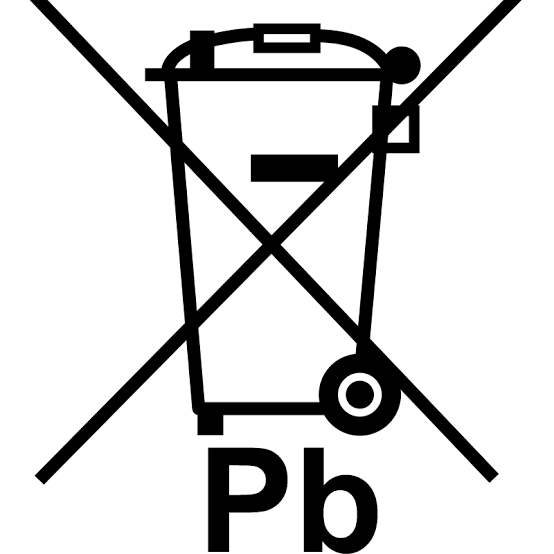
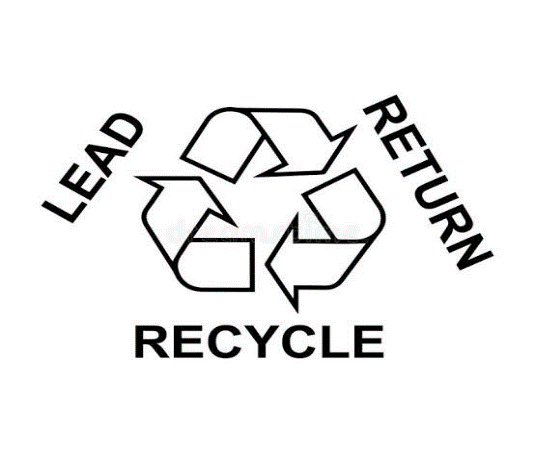
In accordance with the EU Battery Directive and the respective national legislation, lead-acid batteries must be marked by a crossed-out waste bin with the chemical symbol for lead shown below, together with the ISO return/recycling symbol.
16. Other information
Source of data:
- Guideline for Globally Harmonized System of Classification and Labelling of Chemicals (GHS)
- EC-ECB, International Uniform Chemical Information Database (IUCLID)
- Hazardous Substances Data Bank (HSDB)
- Registry of Toxic Effects of Chemical Substances (RTECS)
- National Institute of Technology and Evaluation – NITE (Japan)
- NFPA 704 Standard System for the Identification of the Hazards of Materials for Emergency Response
- International Chemical Safety Cards (ICSC) (http://www.nihs.go.jp/ICSC)
- 3E Company / Ariel WebInsight DB
This Safety Data Sheet complies with EEC Directive 91/155/EEC. The classification is equivalent to current EC directives, but is supplemented by comments from specialist literature and company data. The details and data correspond to our current knowledge, but offer no certainty regarding characteristics or quality description. The data contained in this Safety Data Sheet have been collected with great care from existing data. Targetpower accepts no liability for damage, of any nature or extent, that may arise from the use of the data contained in this Safety Data Sheet.


